
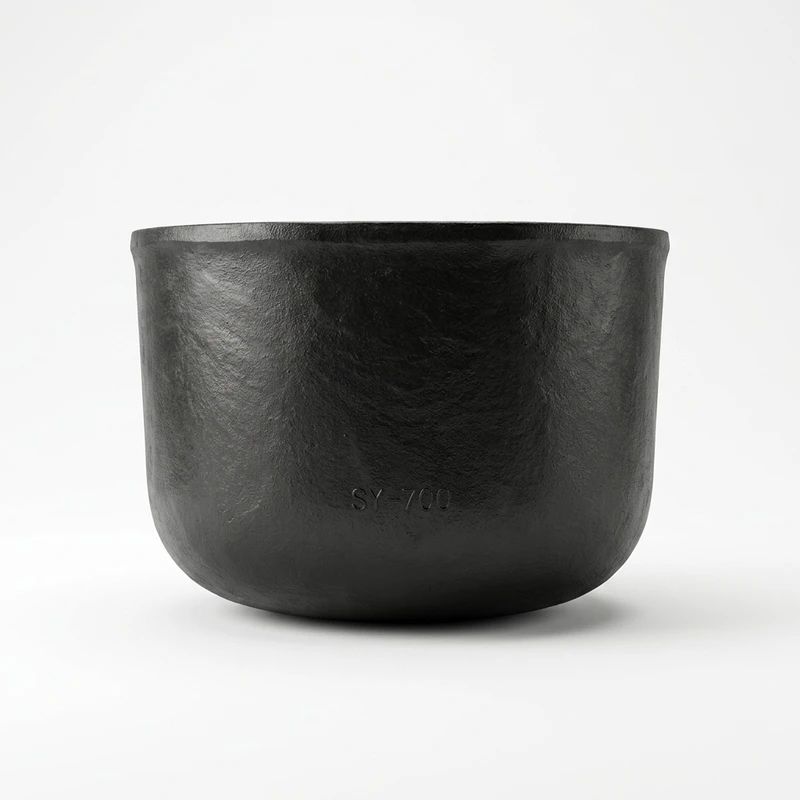
A graphite silicon carbide crucible for aluminum melting is designed to provide excellent thermal conductivity, thermal shock resistance, and long service life in demanding foundry environments.
A poorly selected crucible often leads to:
- Premature cracking
- Oxidation damage
- Metal contamination
- Increased replacement costs
- Production downtime
For many aluminum foundries and recycling plants, graphite silicon carbide crucibles have become the preferred solution due to their excellent thermal conductivity, thermal shock resistance, and long service life.
This guide explains why SiC graphite crucibles are widely used in aluminum melting and how to select the right crucible for your operation.
Why Choose a Graphite Silicon Carbide Crucible for Aluminum Melting
Although aluminum melts at approximately 660°C (1220°F), industrial melting processes usually operate between:
- 700°C–900°C
- Continuous holding conditions
- Frequent charging cycles
These conditions place significant stress on crucibles.
Common challenges include:
Thermal Shock
Cold aluminum scrap is frequently added into a hot furnace.
Rapid temperature changes may cause:
- Cracks
- Structural weakening
- Early crucible failure
Oxidation
High-temperature exposure gradually oxidizes graphite materials.
Poor-quality crucibles suffer accelerated wall thinning and reduced lifespan.
Mechanical Wear
Large scrap pieces can impact crucible walls during charging.
This creates:
- Surface damage
- Micro-cracks
- Premature replacement
Choosing the right crucible material is therefore essential for stable production.
What Is a Graphite Silicon Carbide Crucible?
A graphite silicon carbide crucible combines:
- High-purity graphite
- Silicon carbide particles
- Specialized bonding materials
This engineered structure provides the advantages of both materials.
Graphite Contributes
✔ Excellent thermal conductivity
✔ Fast heat transfer
✔ Uniform temperature distribution
Silicon Carbide Contributes
✔ High mechanical strength
✔ Oxidation resistance
✔ Thermal shock resistance
Together, these characteristics make graphite SiC crucibles ideal for aluminum melting applications.
Benefits of a Graphite Silicon Carbide Crucible for Aluminum Melting
Many foundries choose a graphite silicon carbide crucible for aluminum melting because it improves heat transfer and reduces energy consumption.
1. Faster Heat Transfer
Graphite offers excellent thermal conductivity.
Benefits include:
- Faster melting cycles
- Lower energy consumption
- Improved furnace efficiency
Many foundries report shorter melt times compared with traditional clay graphite crucibles.
2. Superior Thermal Shock Resistance
Aluminum melting operations frequently involve:
- Charging cold ingots
- Adding scrap metal
- Intermittent furnace shutdowns
Graphite silicon carbide crucibles tolerate rapid temperature fluctuations significantly better than many alternative materials.
This reduces:
- Crack formation
- Unexpected failures
- Emergency replacements
3. Longer Service Life
A high-quality SiC graphite crucible can withstand:
- Repeated heating cycles
- Continuous holding operations
- Heavy production schedules
Longer service life means:
- Lower maintenance costs
- Reduced downtime
- Improved production consistency
4. Better Metal Quality
Stable crucible performance helps maintain:
- Consistent melt temperatures
- Reduced contamination risks
- Improved casting quality
This is particularly important for:
- Die casting
- Precision casting
- Automotive aluminum components
5. Lower Overall Production Cost
While premium crucibles may have a higher initial purchase price, the total cost per ton of melted aluminum is often significantly lower.
Savings come from:
- Longer lifespan
- Fewer replacements
- Reduced energy usage
- Less production interruption
Applications of Graphite Silicon Carbide Crucibles for Aluminum Melting
A graphite silicon carbide crucible for aluminum melting is widely used in aluminum recycling plants, die casting factories, and secondary smelters.
Aluminum Foundries
Producing:
- Automotive castings
- Machinery components
- Industrial parts
Die Casting Plants
Used for:
- Holding furnaces
- Transfer furnaces
- Melting furnaces
Aluminum Recycling Facilities
Processing:
- Aluminum scrap
- Beverage cans
- Industrial aluminum waste
Secondary Aluminum Smelters
Where thermal shock resistance is critical because scrap feed quality varies significantly.
How to Select a Graphite Silicon Carbide Crucible for Aluminum Melting
Several factors influence crucible performance.
Furnace Type
Common furnace configurations include:
- Fuel-fired furnaces
- Electric resistance furnaces
- Tilting furnaces
- Induction furnaces
The crucible design should match the heating method.
Crucible Capacity
Typical capacities range from:
- 5 kg
- 50 kg
- 500 kg
- 1000 kg+
Selecting the correct size improves heating efficiency and metal handling.
Operating Temperature
Higher temperatures accelerate oxidation.
For continuous operation above 800°C, premium-grade SiC crucibles are recommended.
Production Intensity
Questions to consider:
- How many melts per day?
- Continuous or batch production?
- Percentage of scrap charging?
The answers affect the optimal crucible specification.
Common Reasons Aluminum Crucibles Fail Prematurely
Even high-quality crucibles can fail if used improperly.
Overheating
Operating beyond recommended temperatures shortens lifespan.
Improper Preheating
Rapid heating can create internal stress.
Incorrect Charging Practices
Dropping heavy scrap directly onto crucible walls may cause cracking.
Poor Furnace Alignment
Uneven heating creates localized hot spots.
Implementing proper operating procedures can dramatically extend crucible life.
Why Many Aluminum Foundries Prefer SiC Graphite Crucibles
Compared with standard clay graphite crucibles, graphite silicon carbide crucibles typically offer:
| Feature | Clay Graphite | SiC Graphite |
|---|---|---|
| Thermal Conductivity | Medium | High |
| Thermal Shock Resistance | Medium | Excellent |
| Mechanical Strength | Medium | High |
| Service Life | Moderate | Longer |
| Production Efficiency | Moderate | Higher |
As aluminum production becomes increasingly cost-sensitive, many foundries are upgrading to SiC graphite crucibles to improve overall operational efficiency.
Frequently Asked Questions
What is the best crucible for aluminum melting?
Graphite silicon carbide crucibles are widely considered one of the best choices because they combine excellent thermal conductivity, thermal shock resistance, and long service life.
How long does an aluminum melting crucible last?
Service life depends on:
- Furnace type
- Operating temperature
- Charging practices
- Crucible quality
A premium SiC graphite crucible can often last significantly longer than conventional clay graphite alternatives.
Can graphite silicon carbide crucibles be used for recycled aluminum?
Yes. They are commonly used in aluminum recycling plants due to their resistance to thermal shock and mechanical wear from scrap charging.
Are SiC crucibles suitable for continuous production?
Yes. Their high strength and thermal stability make them suitable for continuous industrial melting operations.
Conclusion
For aluminum foundries, die casting plants, and recycling facilities, crucible performance directly impacts production efficiency and operating costs.
Graphite silicon carbide crucibles offer a combination of:
- Fast heat transfer
- Excellent thermal shock resistance
- Long service life
- Stable melt quality
When properly selected and maintained, they help reduce downtime, improve energy efficiency, and lower the overall cost of aluminum melting operations.

